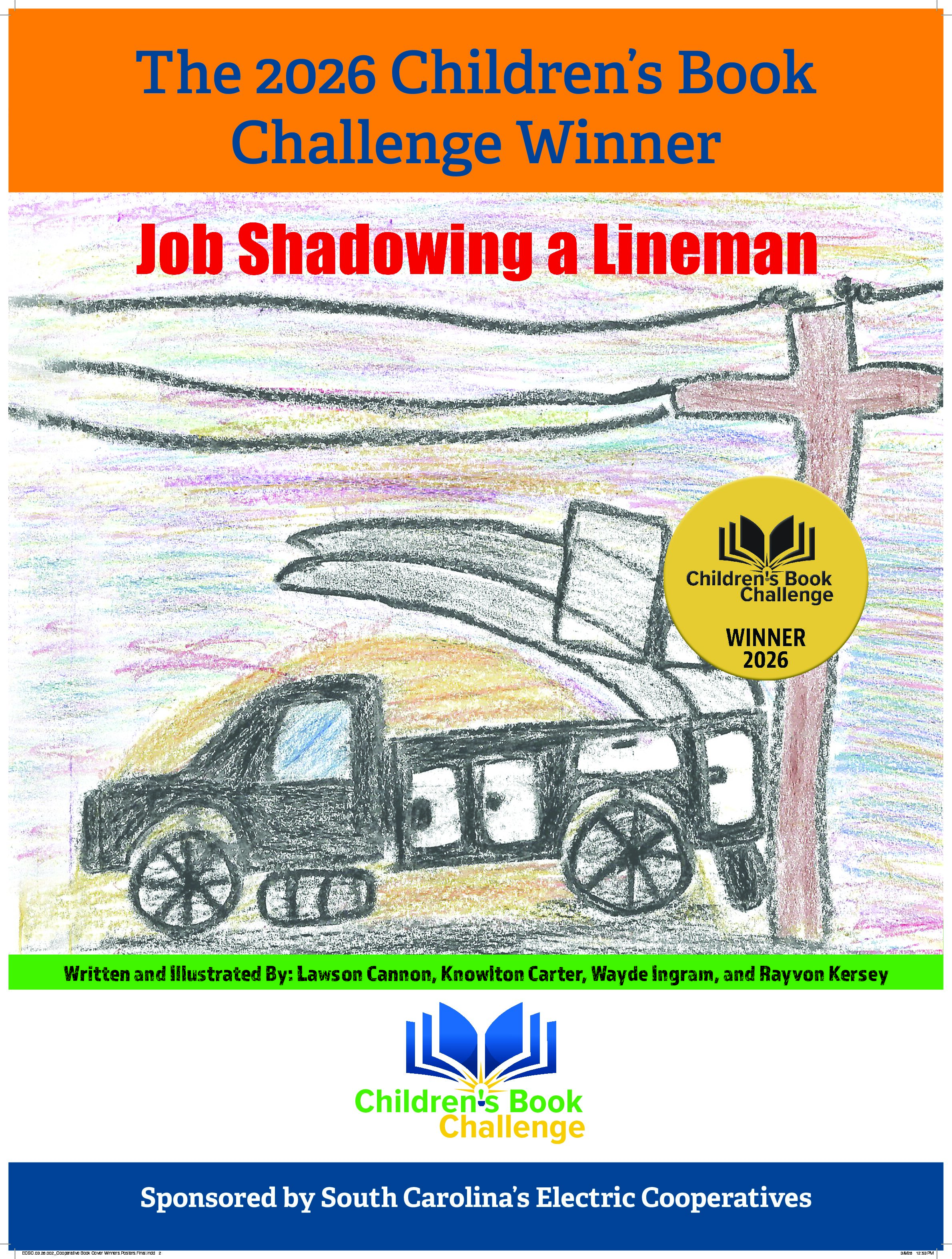
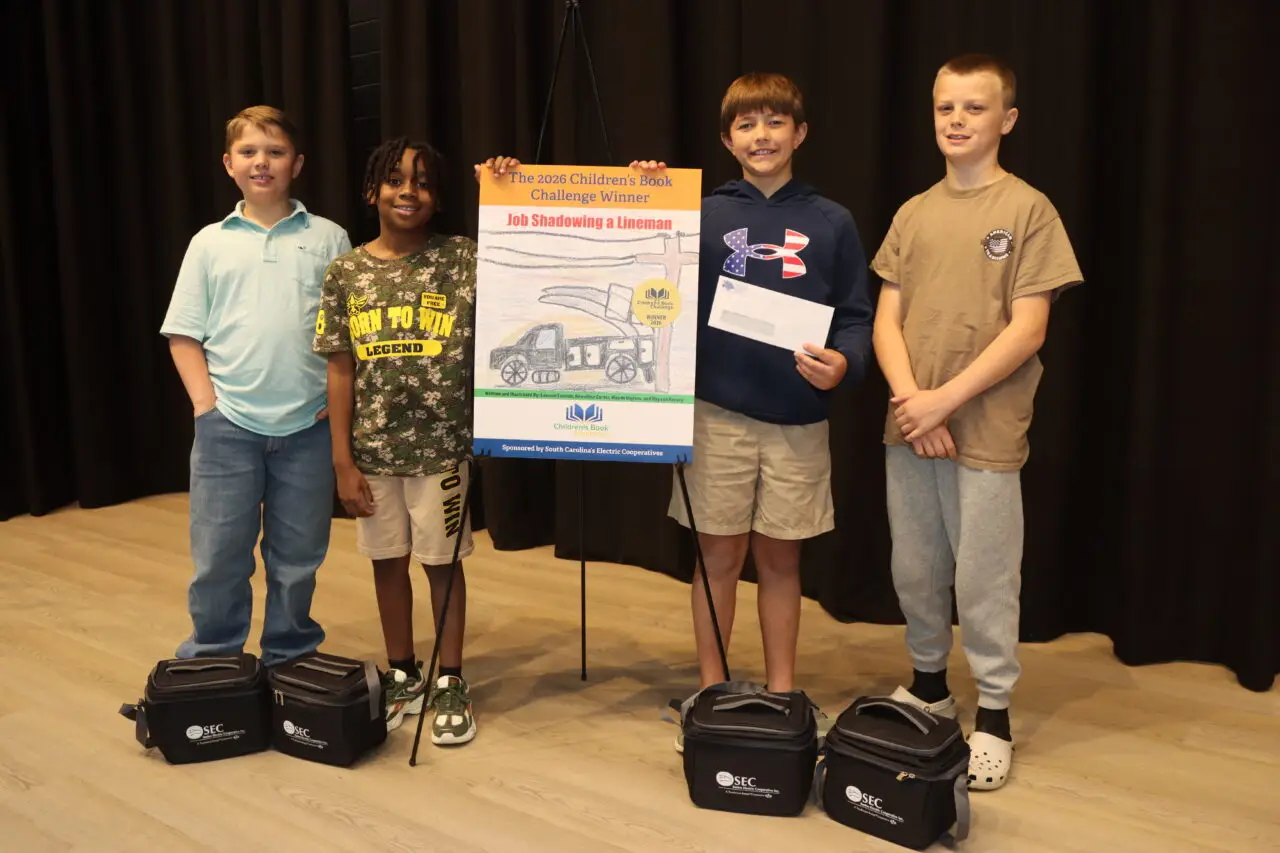
A book written and illustrated by four fourth-grade students at Walker Gamble Elementary School has been selected as one of the statewide winners of the 2026 Children’s Book Challenge. Lawson Cannon, Knowlton Carter, Wayde Ingram and Rayvon Kersey, creators of Job Shadowing a Lineman, were revealed as the winners of the competition’s group division at their school on Thursday.
The four students split a $500 prize, and their book will be printed and mailed to elementary schools throughout South Carolina. Their teacher, Lauren Kinlaw, helped them get started and received a $250 prize. The students and their teacher will be recognized and honored by the South Carolina General Assembly next month.
The Children’s Book Challenge is sponsored by Santee Electric Cooperative and the Electric Cooperatives of South Carolina. Participating students from across the state were asked to write and illustrate a children’s book that focused on a day in the life of a line worker. Job Shadowing a Lineman competed against books from across South Carolina after being selected by Santee Electric as the local finalist.
In Job Shadowing a Lineman, the story’s main character is a young boy named Jaden who goes to work with his father, a Santee Electric line worker. There he learns about the challenges, hazards and importances of his dad’s job.
“We loved the story and the artwork that Lawson, Wayde, Rayvon and Knowlton created,” says Joanna Hayes, Santee Electric’s manager of community relations. “We hope they learned a lot about their electric cooperative and the men and women that keep their power on.”
The book features original artwork and was designed using the online platform StoryJumper. The co-authors accessed resources from scbookchallenge.com as well as support from Santee Electric as they researched and created the book.
“Research is a big part of our standards and I loved seeing them develop those researching skills throughout the process,” says Kinlaw. “They also grew in their writing skills, creating a story, characters and a plot using the skills we’ve been building. It turned out amazing.”
South Carolina’s electric cooperatives have been committed to powering rural communities since 1938. This concern for communities, and the future of our youth, has carried forward to today. By inspiring students to learn more about energy in our state, S.C.’s electric co-ops hope to spark a passion for critical thinking in the minds of tomorrow’s leaders.
